Shinshoji Temple ⭐⭐(神勝寺), a zen and garden Museum (禅と庭のミュージアム), is a place where you can experience what Zen is through various activities, such as sipping a bowl of tea, studying calligraphy, tasting food that sustains life, cleansing the dirt from body and mind, and strolling through the garden.
The vast grounds are dotted with a 17th-century building relocated from Shiga Prefecture (滋賀県), a restored teahouse designed by Sen no Rikyu (千利休の茶室), and a shrine office created by architect and architectural historian Fujimori Terunobu (藤森照信); these grounds make extensive use of pine trees—a plant that symbolizes the region from the Sanyo Road to the Seto Inland Sea—and the garden is arranged to connect these buildings.
The Hakuin Collection, one of the largest in Japan, is also a highlight of the museum, consisting of approximately 200 Zen paintings and calligraphy pieces by Zen master Hakuin (白隠禅師). These works will be exhibited throughout the year in the permanent exhibition hall, Sogendo (荘厳堂), with displays being rotated periodically. The pavilion Kotei (洸庭), designed by sculptor Kohei Nawa (名和晃平) and his creative platform Sandwich, stands in contrast to the Zen art collection. The boat-shaped structure, made of a single material and wrapped in wood, allows visitors to experience an installation inside the space that reflects light from waves. This installation interprets and expresses the teachings of Zen through the perspective of contemporary art.
Every Leaf a Flower: 花紅苑's Autumn Transformation (YouTube link)
Photo Gallery
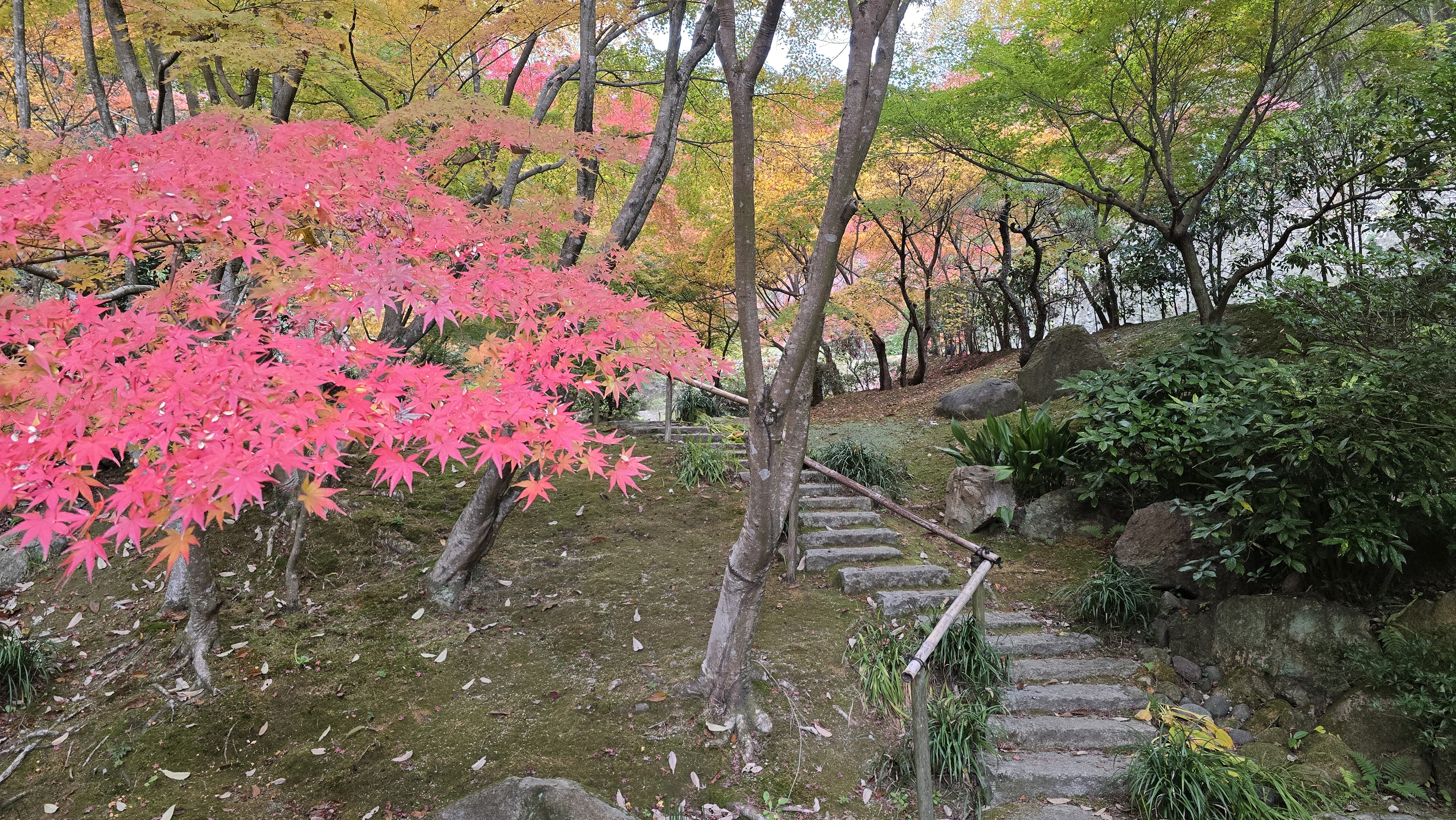
On this autumn day at Shinshoji Temple, the maple leaves peaked in vibrant red hues, transforming the grounds into a masterpiece. Each leaf bloomed like a delicate flower, creating a warm, wondrous landscape. Strolling through this tranquil haven, I immersed myself in the season's splendor, savoring the red and gold foliage at a leisurely pace—a moment of pure bliss etched in nature's palette.
A Quiet Day in a Berlin Park, 1933 In the early 1930s, Takehisa Yumeji's studio became a hub for artists, inspiring ventures like the Mt. Haruna Art Research Institute. In 1931, Yumeji began a journey to the United States and Europe, supported by exhibitions of his work. While in the U.S. for 16 months, he continued to paint, creating pieces like Nude on the West Coast. Afterward, Yumeji taught in Berlin until the school was closed by the Nazis. He returned to Japan in 1933, his overseas experiences shaping his final works. His last exhibition was held in Taipei that year. Yumeji passed away from tuberculosis in 1934, leaving behind a legacy of beauty and cultural exchange. Read more: Prints in Collection—Takehisa Yumeji (1884-1934) Kuronosuke 黒の助: a Legacy Little Black Cat (YouTube link ) Photo Gallery The Yumeji Art Museum in Okayama exhibits many black cat paintings because the artist, Yumeji Takehisa , frequently featured them in his work, particularly in his bij...
This is a passageway leading to Nankai-Namba Station. Be aware that underground passages in Japan can be quite complex for visitors. When you arrive at Kansai International Airport (symbol: KIX) and try to reach your destinations via trains, sometimes you need to make connections at Namba Station (see Fig. 2). Namba Station is one of the main connection points (the other two are Umeda and Tennoji Stations). But, Namba Station actually means 4 different stations on Google map (see Fig. 3&4) : Namba Station (Subway): This station provides access to the Osaka Metro lines: Midosuji (see Fig. 4), Sennichimae , and Yotsubashi . These lines can take you to popular destinations like Osaka Station, Koreatown, Honmachi, and Nippombashi. JR-Namba Station: This smaller station has only four tracks and two platforms. It's located within the Osaka City Air Terminal (OCAT) building, and the entrance can be easy to miss. Thankfully, it's connected to the ...
Koyasan (高野山), a popular pilgrimage destination for centuries, has been connected to the outside world by a network of pilgrimage trails. While most visitors enter the mountain by cable car nowadays, many of the pilgrimage trails still remain in use. Koyasan Travel—Temple Lodging (Shukubo; YouTube link ) Part of the pilgrimage trails, the Fudozaka Trail (不動坂; click the map to enlarge), leads to Koyasan from Gokurakubashi Station, the lower station of the Koyasan Cablecar. The steep, paved trail is 2.5 kilometers long and takes about an hour to ascend and less time to descend. The trail ends at the Nyonindo temple (女人堂). [1] On 11/27/2016, I have decided to descend from Fudozaka Trail instead of riding the cable car. I was the only person on the trail at beginning. However, in the middle of the trail, another young blonde girl passed me by swiftly with a big smile on her face. I was really surprised to see another soul on that rainy day. Althoug...