Shinshoji Temple ⭐⭐(神勝寺), a zen and garden Museum (禅と庭のミュージアム), is a place where you can experience what Zen is through various activities, such as sipping a bowl of tea, studying calligraphy, tasting food that sustains life, cleansing the dirt from body and mind, and strolling through the garden.
The vast grounds are dotted with a 17th-century building relocated from Shiga Prefecture (滋賀県), a restored teahouse designed by Sen no Rikyu (千利休の茶室), and a shrine office created by architect and architectural historian Fujimori Terunobu (藤森照信); these grounds make extensive use of pine trees—a plant that symbolizes the region from the Sanyo Road to the Seto Inland Sea—and the garden is arranged to connect these buildings.
The Hakuin Collection, one of the largest in Japan, is also a highlight of the museum, consisting of approximately 200 Zen paintings and calligraphy pieces by Zen master Hakuin (白隠禅師). These works will be exhibited throughout the year in the permanent exhibition hall, Sogendo (荘厳堂), with displays being rotated periodically. The pavilion Kotei (洸庭), designed by sculptor Kohei Nawa (名和晃平) and his creative platform Sandwich, stands in contrast to the Zen art collection. The boat-shaped structure, made of a single material and wrapped in wood, allows visitors to experience an installation inside the space that reflects light from waves. This installation interprets and expresses the teachings of Zen through the perspective of contemporary art.
The Zen Sanctuary You’ve Never Heard Of: Shinshoji 🍂🧘♂️ (YouTube link)
Getting There: Navigation and Logistics
Reaching the secluded grounds of Shinshoji is most efficient via the Tomotetsu (鞆鉄道) express bus departing from Fukuyama Station. While the express route offers a direct 34-minute connection to the temple gates, travelers should note that departures are less frequent than local services. Local buses require a longer walk from the nearest stop; for real-time scheduling and route confirmation, the Tomotetsu Bus Information Center—conveniently located adjacent to the train station—provides up-to-date transit maps and assistance.
Bus route map run by Tomotetsu (鞆鉄道)
Photo Gallery
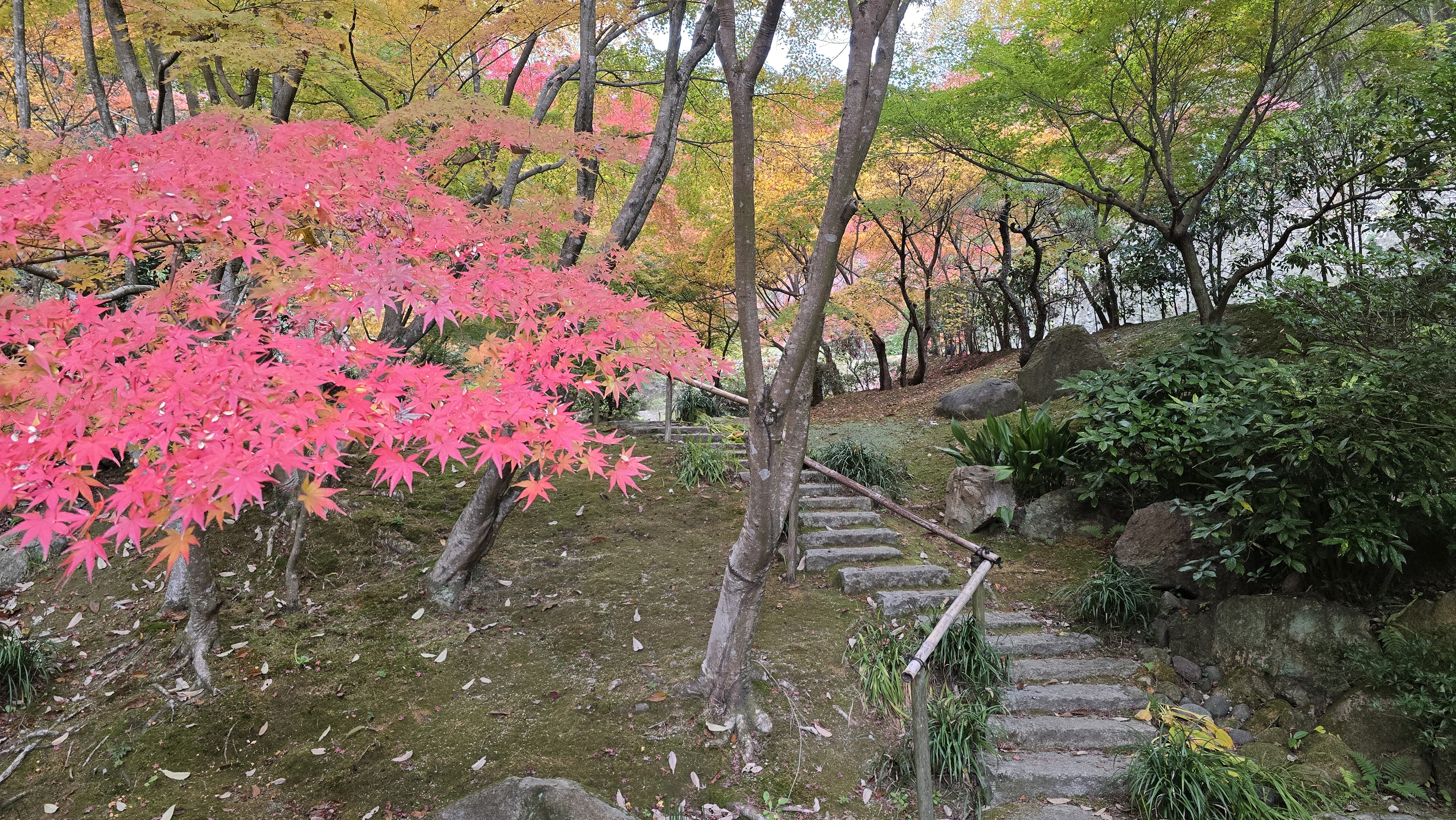
On this autumn day at Shinshoji Temple, the maple leaves peaked in vibrant red hues, transforming the grounds into a masterpiece. Each leaf bloomed like a delicate flower, creating a warm, wondrous landscape. Strolling through this tranquil haven, I immersed myself in the season's splendor, savoring the red and gold foliage at a leisurely pace—a moment of pure bliss etched in nature's palette.
TL;DR: T‑10 is gone — Barcelona now uses the T‑mobilitat system. The best tourist ticket is the T‑Casual (10 rides, Zone 1), but it does not cover the Airport Metro (L9 Sud) or the Aerobús. If you land at T1, skip buying transit tickets at the airport and take the Aerobús into the city first. Once you reach the city center and drop your bags, buy your T‑Casual from any Metro station vending machine and start using it for all your Barcelona travel. How to Buy and Use Barcelona's NEW Contactless Transport Cards (YouTube link) Barcelona has officially retired the old T‑10 paper ticket . Since 2020, the city has transitioned to T‑mobilitat , a modern contactless system used across the metro, buses, trams, FGC, and RENFE trains. If you’re reading older guides, you’ll still see references to the T‑10 — but as of 2026, the T‑Casual and other T‑mobilitat tickets have fully replaced it. For most visitors, the T‑Casual remains the easiest and most affordable way to get around Barcelona. Th...
This is a passageway leading to Nankai-Namba Station. Be aware that underground passages in Japan can be quite complex for visitors. When you arrive at Kansai International Airport (symbol: KIX) and try to reach your destinations via trains, sometimes you need to make connections at Namba Station (see Fig. 2). Namba Station is one of the main connection points (the other two are Umeda and Tennoji Stations). But, Namba Station actually means 4 different stations on Google map (see Fig. 3&4) : Namba Station (Subway): This station provides access to the Osaka Metro lines: Midosuji (see Fig. 4), Sennichimae , and Yotsubashi . These lines can take you to popular destinations like Osaka Station, Koreatown, Honmachi, and Nippombashi. JR-Namba Station: This smaller station has only four tracks and two platforms. It's located within the Osaka City Air Terminal (OCAT) building, and the entrance can be easy to miss. Thankfully, it's connected to the ...
Hagi City , Yamaguchi Prefecture, Japan, is a UNESCO World Heritage Site renowned for its maritime and historical significance, particularly from the Edo period and Meiji Restoration . This coastal town captivates with its well-preserved samurai districts, pine-lined roads, clear waterways, and serene ambiance, evoking a nostalgic journey back in time. Historical figures like Yoshida Shoin and Shinsaku Takasugi shaped its legacy. Cycling, boat trips, temple visits, and local specialties like summer tangerines and Hagi ware highlight Hagi’s charm. Hidden gems like Tokoji Temple make it a must-visit for an authentic, enriching experience. Japan’s Timeless Beauty – 2 Days in Hagi, a World Heritage Town (YouTube link ) Things to Do Boat Trip: A 40-minute sightseeing boat tour provides a unique perspective of Hagi, with reflections on the town’s historical significance during the ride. Bicycle Rental: You can rent a bike at the station, which is a recommended way to explore Hagi. C...