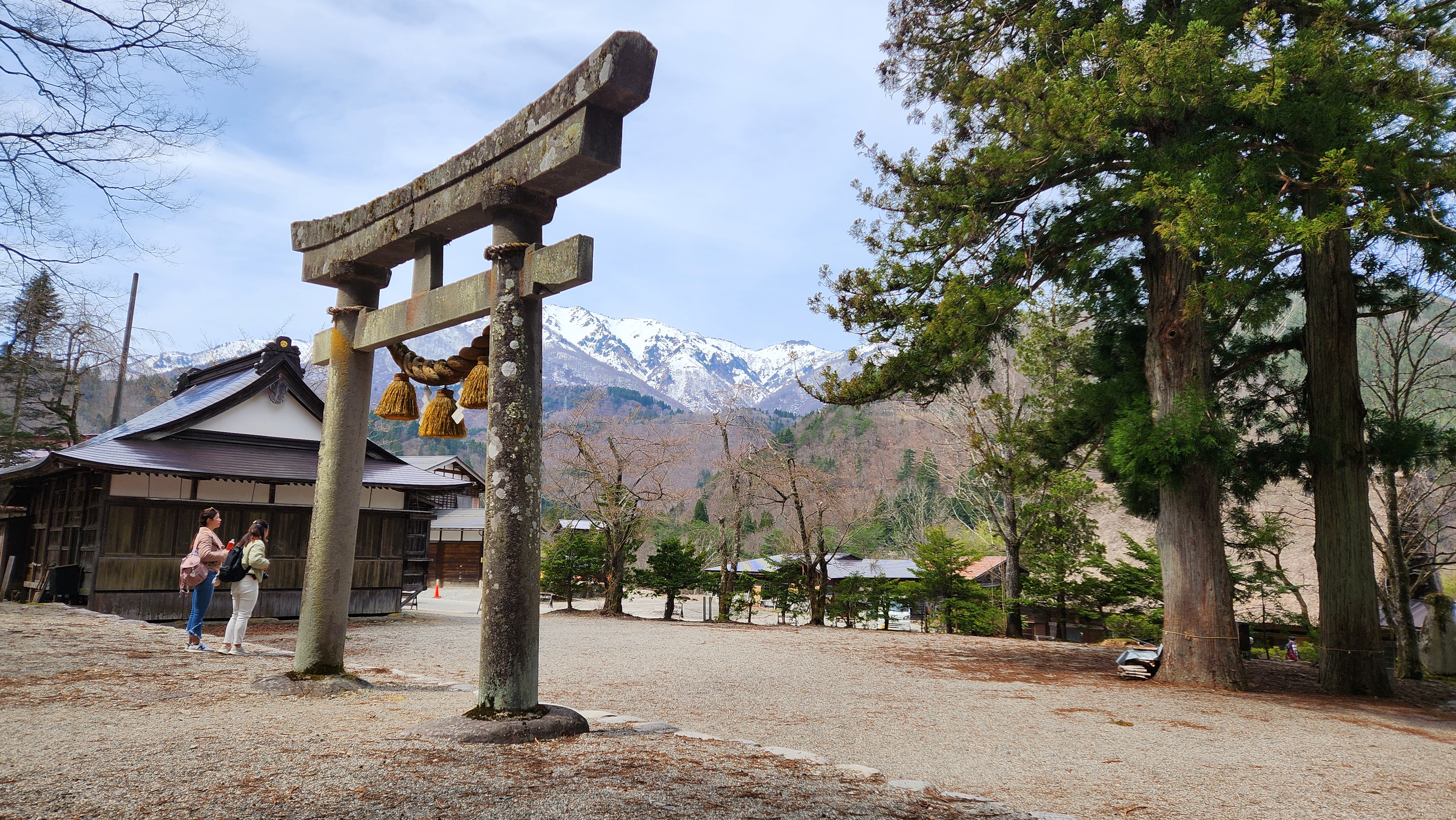
UNESCO Heritage: A preserved Edo-period village famous for its "Gassho-zukuri" (prayer-hand) thatched houses.
Ancient Engineering: Massive wooden structures built entirely without nails, using only local timber, straw, and complex joinery.
Hidden History: The homes center around an irori (sunken hearth), while the spacious attics were historically used for silkworm cultivation.
Logistics: Most museum houses (like the Wada House) have a 300 JPY admission fee.
Travel Tip: Located in Gifu Prefecture; easily accessible via a 1.5-hour bus or drive from Takayama.
Beyond the Quick Facts
Once you move past the technical marvels, Shirakawa-go (白川郷 ⭐⭐⭐) reveals a deeper story shaped by its rugged landscape and the quiet rhythms of village life. These iconic homes were born of necessity, with steep roofs designed specifically to shed the heavy snowfall of the Japanese Alps.
What makes the village truly special:
Ingenious Adaptation: The architecture is a living testament to how local people adapted their lifestyle to survive harsh winter conditions.
Immersive Scenery: Nestled along the Shogawa River, the village offers a serene atmosphere that changes beautifully with the seasons.
Living Traditions: Far from just a museum, the area allows visitors to experience Japan’s rich heritage through local crafts and traditional mountain cuisine.
Shirakawa-go offers a peaceful glimpse into a bygone era, remaining one of Japan’s most evocative cultural treasures.
Sweeping view of the Shirakawa-go 白川郷 (YouTube link)
Shirakawa-go's Scenic Gateway: The Ogimachi Suspension Bridge (YouTube link)
Discovering the Beauty of Shirakawa-go
I spent one night and two days in a guesthouse (民宿 / みんしゅく) in Shirakawa-go, staying from April 11th to 12th. As a popular tourist destination, the main street can become crowded. To avoid the crowds, I visited the Gasshozukuri Minkaen Open Air Museum on my first day. This open-air museum is similar to Hida no Sato village in Takayama. On the morning of my second day, I enjoyed the peaceful atmosphere of the village and took most of my photos.
TL;DR: T‑10 is gone — Barcelona now uses the T‑mobilitat system. The best tourist ticket is the T‑Casual (10 rides, Zone 1), but it does not cover the Airport Metro (L9 Sud) or the Aerobús. If you land at T1, skip buying transit tickets at the airport and take the Aerobús into the city first. Once you reach the city center and drop your bags, buy your T‑Casual from any Metro station vending machine and start using it for all your Barcelona travel. How to Buy and Use Barcelona's NEW Contactless Transport Cards (YouTube link) Barcelona has officially retired the old T‑10 paper ticket . Since 2020, the city has transitioned to T‑mobilitat , a modern contactless system used across the metro, buses, trams, FGC, and RENFE trains. If you’re reading older guides, you’ll still see references to the T‑10 — but as of 2026, the T‑Casual and other T‑mobilitat tickets have fully replaced it. For most visitors, the T‑Casual remains the easiest and most affordable way to get around Barcelona. Th...
This is a passageway leading to Nankai-Namba Station. Be aware that underground passages in Japan can be quite complex for visitors. When you arrive at Kansai International Airport (symbol: KIX) and try to reach your destinations via trains, sometimes you need to make connections at Namba Station (see Fig. 2). Namba Station is one of the main connection points (the other two are Umeda and Tennoji Stations). But, Namba Station actually means 4 different stations on Google map (see Fig. 3&4) : Namba Station (Subway): This station provides access to the Osaka Metro lines: Midosuji (see Fig. 4), Sennichimae , and Yotsubashi . These lines can take you to popular destinations like Osaka Station, Koreatown, Honmachi, and Nippombashi. JR-Namba Station: This smaller station has only four tracks and two platforms. It's located within the Osaka City Air Terminal (OCAT) building, and the entrance can be easy to miss. Thankfully, it's connected to the ...
Hagi City , Yamaguchi Prefecture, Japan, is a UNESCO World Heritage Site renowned for its maritime and historical significance, particularly from the Edo period and Meiji Restoration . This coastal town captivates with its well-preserved samurai districts, pine-lined roads, clear waterways, and serene ambiance, evoking a nostalgic journey back in time. Historical figures like Yoshida Shoin and Shinsaku Takasugi shaped its legacy. Cycling, boat trips, temple visits, and local specialties like summer tangerines and Hagi ware highlight Hagi’s charm. Hidden gems like Tokoji Temple make it a must-visit for an authentic, enriching experience. Japan’s Timeless Beauty – 2 Days in Hagi, a World Heritage Town (YouTube link ) Things to Do Boat Trip: A 40-minute sightseeing boat tour provides a unique perspective of Hagi, with reflections on the town’s historical significance during the ride. Bicycle Rental: You can rent a bike at the station, which is a recommended way to explore Hagi. C...