Mizukake Tradition—Pouring Prayers over Stone Guardians
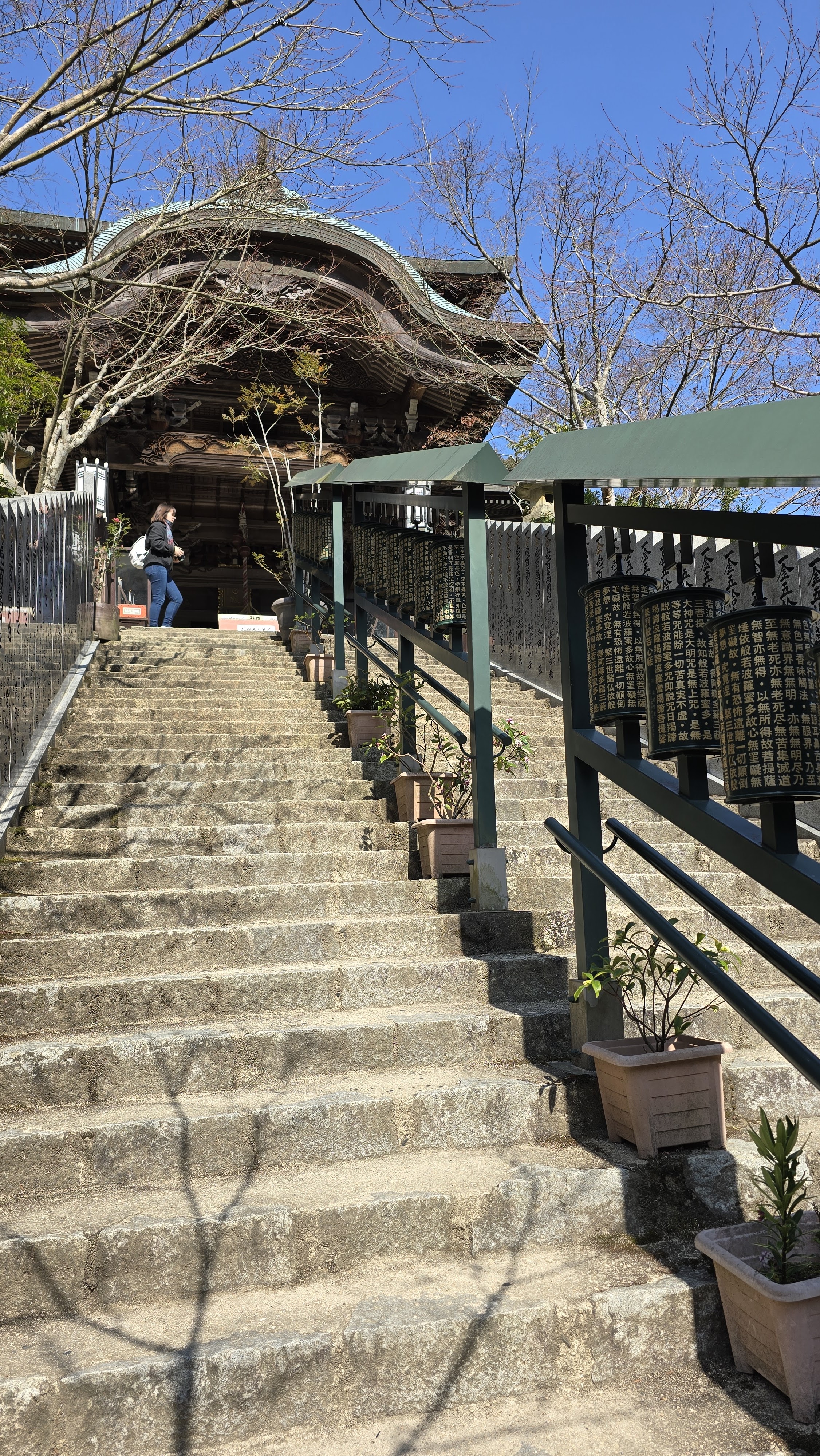
Daisho-in 大聖院⭐⭐, the head temple of Miyajima 宮島, is a significant spiritual site nestled within one of Japan's Three Most Scenic Spots. Just a five-minute walk from the iconic World Heritage site Itsukushima Shrine, you'll reach the Niomon Gate, marking the entrance to the temple grounds. As you ascend the long slope towards Onarimon Gate御成門, be sure to stroke the Daihannyakyo Sutra 大般若経切 tubes lining the steps; this simple act is believed to accumulate merit and usher in happiness.
Inside the temple, discover the Chokgando Hall, home to the principal image of Namikiri Fudo Myo-o. This wish-granting deity, a gift from Toyotomi Hideyoshi, is said to foster strong connections in your personal and professional life, bringing good fortune and career advancement. Elsewhere on the serene grounds, you'll find the mesmerizing 500 Rakan Statues . Each statue, depicting a disciple of Buddha, boasts a unique expression and posture, giving them an almost lifelike quality. Together, they form a powerful display of spiritual presence and artistic detail.
Your Guide to the Sacred Grounds of Daisho-in (in Japanese)
Photo Gallery
We visited on a sunny March 22, 2025, and enjoyed a serene stroll along the stairs and up the slopes. Every corner of the landscape offered amazing views, dotted with Buddha statues, making each moment truly enjoyable.
Rising majestically toward the heavens, Maniden Hall (摩尼殿) commands the skyline with its striking presence
The Eleven-Headed Kannon Stands Graceful with Maniden Hall Rising Behind
Prayer Wheels
Lining the stone steps to Maniden Hall, rows of gleaming metal Sutra Wheels—each etched with sacred Buddhist texts—invite passersby to give them a gentle spin. With every turn, it's said, the spiritual merit of reciting an entire sutra is quietly awakened.
Spinning Sutra Wheels: A Path to Maniden Hall
Henjo Cave
Step into the Henjokutsu Cave 遍照窟within Daishi-do Hall 大師堂 and embark on a unique spiritual journey. This "sand-stepping dojo" offers a condensed version of the 88 sacred sites of Shikoku. Pilgrims believe that by walking on the sand, which is sourced and buried from each of the actual sacred sites, you receive the same profound blessings as those who complete the full Shikoku pilgrimage.
TL;DR: T‑10 is gone — Barcelona now uses the T‑mobilitat system. The best tourist ticket is the T‑Casual (10 rides, Zone 1), but it does not cover the Airport Metro (L9 Sud) or the Aerobús. If you land at T1, skip buying transit tickets at the airport and take the Aerobús into the city first. Once you reach the city center and drop your bags, buy your T‑Casual from any Metro station vending machine and start using it for all your Barcelona travel. How to Buy and Use Barcelona's NEW Contactless Transport Cards (YouTube link) Barcelona has officially retired the old T‑10 paper ticket . Since 2020, the city has transitioned to T‑mobilitat , a modern contactless system used across the metro, buses, trams, FGC, and RENFE trains. If you’re reading older guides, you’ll still see references to the T‑10 — but as of 2026, the T‑Casual and other T‑mobilitat tickets have fully replaced it. For most visitors, the T‑Casual remains the easiest and most affordable way to get around Barcelona. Th...
Hagi City , Yamaguchi Prefecture, Japan, is a UNESCO World Heritage Site renowned for its maritime and historical significance, particularly from the Edo period and Meiji Restoration . This coastal town captivates with its well-preserved samurai districts, pine-lined roads, clear waterways, and serene ambiance, evoking a nostalgic journey back in time. Historical figures like Yoshida Shoin and Shinsaku Takasugi shaped its legacy. Cycling, boat trips, temple visits, and local specialties like summer tangerines and Hagi ware highlight Hagi’s charm. Hidden gems like Tokoji Temple make it a must-visit for an authentic, enriching experience. Japan’s Timeless Beauty – 2 Days in Hagi, a World Heritage Town (YouTube link ) Things to Do Boat Trip: A 40-minute sightseeing boat tour provides a unique perspective of Hagi, with reflections on the town’s historical significance during the ride. Bicycle Rental: You can rent a bike at the station, which is a recommended way to explore Hagi. C...
This is a passageway leading to Nankai-Namba Station. Be aware that underground passages in Japan can be quite complex for visitors. When you arrive at Kansai International Airport (symbol: KIX) and try to reach your destinations via trains, sometimes you need to make connections at Namba Station (see Fig. 2). Namba Station is one of the main connection points (the other two are Umeda and Tennoji Stations). But, Namba Station actually means 4 different stations on Google map (see Fig. 3&4) : Namba Station (Subway): This station provides access to the Osaka Metro lines: Midosuji (see Fig. 4), Sennichimae , and Yotsubashi . These lines can take you to popular destinations like Osaka Station, Koreatown, Honmachi, and Nippombashi. JR-Namba Station: This smaller station has only four tracks and two platforms. It's located within the Osaka City Air Terminal (OCAT) building, and the entrance can be easy to miss. Thankfully, it's connected to the ...