Clipchamp Video Editing Tips and Tricks (YouTube link)
A couple of friends asked me what tool I used to do AI video editing and how. Here are the details of using Microsoft Clipchamp for my new videos.
Clipchamp is free with some goodies
At beginning, I used to be in the camp of using "Photos Legacy". But, after I've discovered the new tool named Clipchamp, I've moved on with no regret mainly because the new "Create a video with AI" feature. With the new AI feature, we are empowered with:
Using AI-powered features to enhance my video editing in Clipchamp's easy online video editor
Condensing and abstracting a collection of video clips into a nice short video for YouTube uploading
Learning Clipchamp features from the AI-generated video example
Note that you can choose to finalize your newly AI-generated new video as is or you can edit it further manually. And, I like to modify AI-generated video further by adding my own ideas (e.g., adding new title pages, etc.).
Other capabilities include:
Text to speech
Auto-captions
etc.
Two Versions of Clipchamp
You can download Clipchamp app to your laptop or you can use web-based version (link) with Chrome browser (note that Firefox is not supported). Both versions share the same user account.
Once I've run into "Buffering" issue on my Clipchamp app and was advised by a Microsoft Clipchamp support person (or bot?) by switching to web-based version to resolve the issue with the following support document:
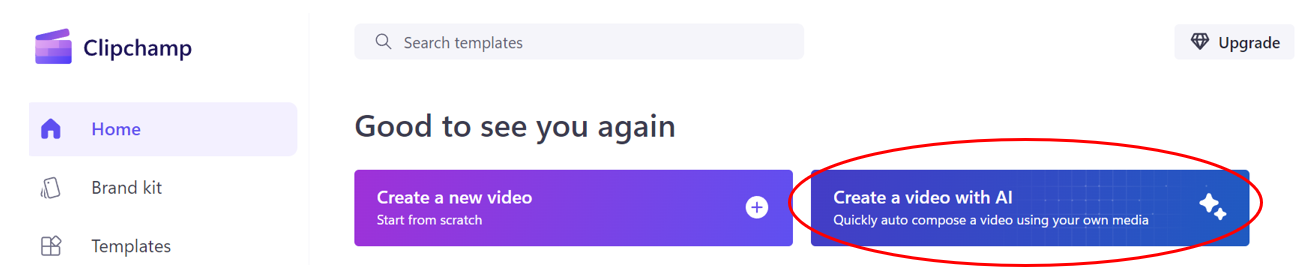
Once you have signed into Clipchamp, click on the "Create a video with AI" button.
Add your media after you specify the project type and vide type...
Drag & drop your clips. But, you may want to sort the clips by some order first (e.g., name or datetime).
After clicking on "Get Started", it moves to select which video style you would like to have (you can explore and select a style you want or just let AI choose.
Next you select which aspect ratio suits your video and how long should your video be...
Next you can either finalize your AI-generated video or edit it further
Edit in Timeline
As shown below, I've edited my video further by:
Adding two photos (as highlighted) to be used at the beginning and ending portions of the video
Adding Text to the title page as highlighted
Adjusting overlay and audio timelines based on the new durations
TL;DR: T‑10 is gone — Barcelona now uses the T‑mobilitat system. The best tourist ticket is the T‑Casual (10 rides, Zone 1), but it does not cover the Airport Metro (L9 Sud) or the Aerobús. If you land at T1, skip buying transit tickets at the airport and take the Aerobús into the city first. Once you reach the city center and drop your bags, buy your T‑Casual from any Metro station vending machine and start using it for all your Barcelona travel. How to Buy and Use Barcelona's NEW Contactless Transport Cards (YouTube link) Barcelona has officially retired the old T‑10 paper ticket . Since 2020, the city has transitioned to T‑mobilitat , a modern contactless system used across the metro, buses, trams, FGC, and RENFE trains. If you’re reading older guides, you’ll still see references to the T‑10 — but as of 2026, the T‑Casual and other T‑mobilitat tickets have fully replaced it. For most visitors, the T‑Casual remains the easiest and most affordable way to get around Barcelona. Th...
Hagi City , Yamaguchi Prefecture, Japan, is a UNESCO World Heritage Site renowned for its maritime and historical significance, particularly from the Edo period and Meiji Restoration . This coastal town captivates with its well-preserved samurai districts, pine-lined roads, clear waterways, and serene ambiance, evoking a nostalgic journey back in time. Historical figures like Yoshida Shoin and Shinsaku Takasugi shaped its legacy. Cycling, boat trips, temple visits, and local specialties like summer tangerines and Hagi ware highlight Hagi’s charm. Hidden gems like Tokoji Temple make it a must-visit for an authentic, enriching experience. Japan’s Timeless Beauty – 2 Days in Hagi, a World Heritage Town (YouTube link ) Things to Do Boat Trip: A 40-minute sightseeing boat tour provides a unique perspective of Hagi, with reflections on the town’s historical significance during the ride. Bicycle Rental: You can rent a bike at the station, which is a recommended way to explore Hagi. C...
This is a passageway leading to Nankai-Namba Station. Be aware that underground passages in Japan can be quite complex for visitors. When you arrive at Kansai International Airport (symbol: KIX) and try to reach your destinations via trains, sometimes you need to make connections at Namba Station (see Fig. 2). Namba Station is one of the main connection points (the other two are Umeda and Tennoji Stations). But, Namba Station actually means 4 different stations on Google map (see Fig. 3&4) : Namba Station (Subway): This station provides access to the Osaka Metro lines: Midosuji (see Fig. 4), Sennichimae , and Yotsubashi . These lines can take you to popular destinations like Osaka Station, Koreatown, Honmachi, and Nippombashi. JR-Namba Station: This smaller station has only four tracks and two platforms. It's located within the Osaka City Air Terminal (OCAT) building, and the entrance can be easy to miss. Thankfully, it's connected to the ...