Attention: Click here to view a mobile-friendly version.
The Plaza Mayor has been the scene of multitudinous events in Madrid:
Markets (Christmas Market),
Bullfights,
Soccer games,
Public executions, etc.
The Plaza Mayor also has a ring of old and traditional shops and cafes under its porticoes. Celebrations for San Isidro (patron saint of Madrid) are also held here. The Plaza Mayor is now a major tourist attraction, visited by millions of tourists a year.
Video 1. Plaza Mayor Square in Madrid (YouTube link)
Introduction
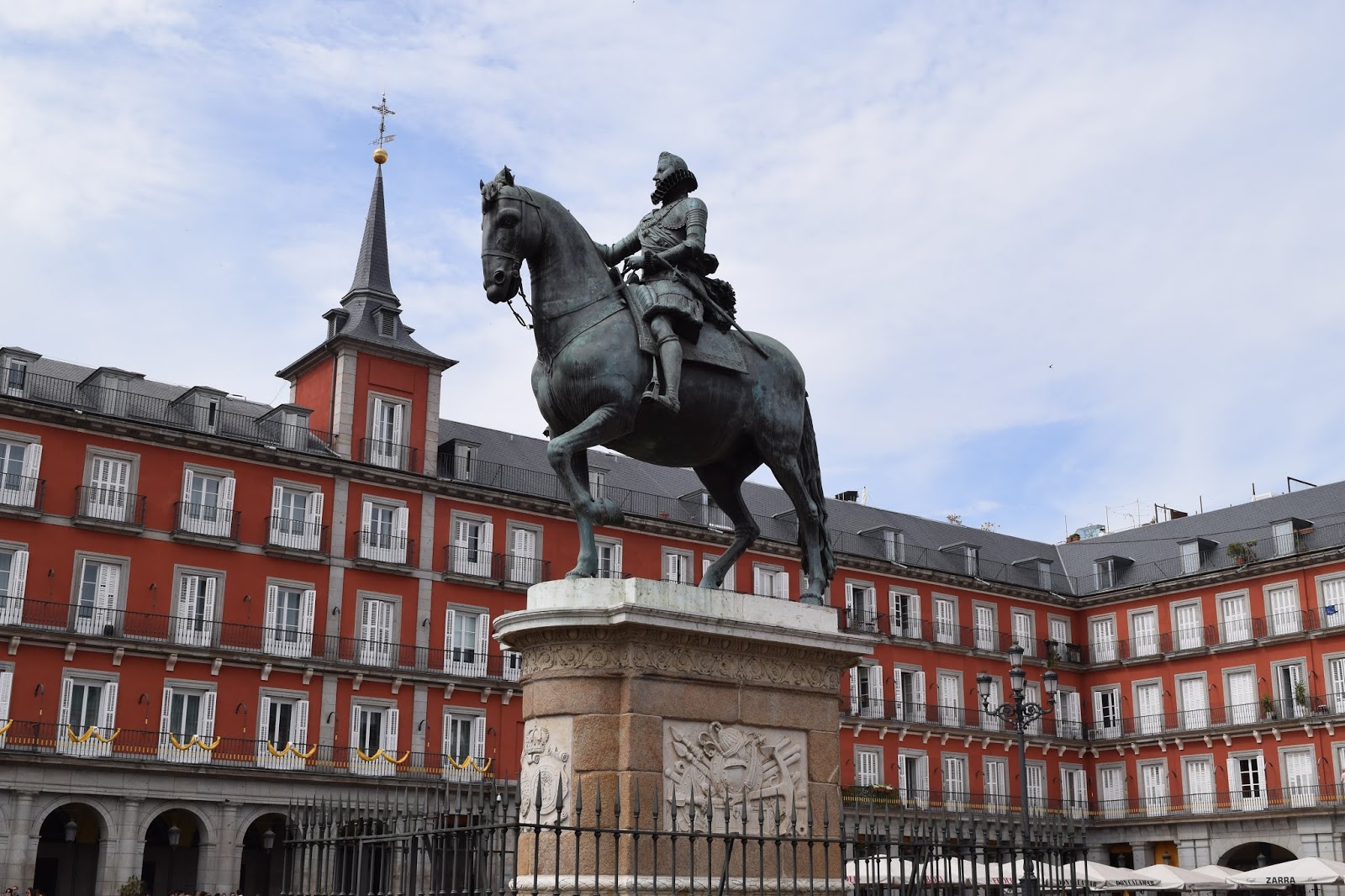
The Plaza Mayor, a grand arcaded square in the center of Madrid is very popular with tourists and locals alike. The symmetrical rectangular square features a uniform architecture. Measuring 129 by 94 meters, and is surrounded by three-story residential buildings having 237 balconies facing the Plaza. It has a total of nine entrance ways.
Figure 1. Sol Station
How to Access
It is located only a few blocks away from another famous plaza, the Puerta del Sol. To reach it, you can take:
TL;DR: T‑10 is gone — Barcelona now uses the T‑mobilitat system. The best tourist ticket is the T‑Casual (10 rides, Zone 1), but it does not cover the Airport Metro (L9 Sud) or the Aerobús. If you land at T1, skip buying transit tickets at the airport and take the Aerobús into the city first. Once you reach the city center and drop your bags, buy your T‑Casual from any Metro station vending machine and start using it for all your Barcelona travel. How to Buy and Use Barcelona's NEW Contactless Transport Cards (YouTube link) Barcelona has officially retired the old T‑10 paper ticket . Since 2020, the city has transitioned to T‑mobilitat , a modern contactless system used across the metro, buses, trams, FGC, and RENFE trains. If you’re reading older guides, you’ll still see references to the T‑10 — but as of 2026, the T‑Casual and other T‑mobilitat tickets have fully replaced it. For most visitors, the T‑Casual remains the easiest and most affordable way to get around Barcelona. Th...
This is a passageway leading to Nankai-Namba Station. Be aware that underground passages in Japan can be quite complex for visitors. When you arrive at Kansai International Airport (symbol: KIX) and try to reach your destinations via trains, sometimes you need to make connections at Namba Station (see Fig. 2). Namba Station is one of the main connection points (the other two are Umeda and Tennoji Stations). But, Namba Station actually means 4 different stations on Google map (see Fig. 3&4) : Namba Station (Subway): This station provides access to the Osaka Metro lines: Midosuji (see Fig. 4), Sennichimae , and Yotsubashi . These lines can take you to popular destinations like Osaka Station, Koreatown, Honmachi, and Nippombashi. JR-Namba Station: This smaller station has only four tracks and two platforms. It's located within the Osaka City Air Terminal (OCAT) building, and the entrance can be easy to miss. Thankfully, it's connected to the ...
Hagi City , Yamaguchi Prefecture, Japan, is a UNESCO World Heritage Site renowned for its maritime and historical significance, particularly from the Edo period and Meiji Restoration . This coastal town captivates with its well-preserved samurai districts, pine-lined roads, clear waterways, and serene ambiance, evoking a nostalgic journey back in time. Historical figures like Yoshida Shoin and Shinsaku Takasugi shaped its legacy. Cycling, boat trips, temple visits, and local specialties like summer tangerines and Hagi ware highlight Hagi’s charm. Hidden gems like Tokoji Temple make it a must-visit for an authentic, enriching experience. Japan’s Timeless Beauty – 2 Days in Hagi, a World Heritage Town (YouTube link ) Things to Do Boat Trip: A 40-minute sightseeing boat tour provides a unique perspective of Hagi, with reflections on the town’s historical significance during the ride. Bicycle Rental: You can rent a bike at the station, which is a recommended way to explore Hagi. C...